The archetype everyone asks for first
Elf AI Girlfriend: How a High Elf Character Actually Talks
An elf AI girlfriend is an AI character built on the elven archetype: long lived, formal, physically restrained and slow to give anything away. That makes her the hardest character in fantasy to fluster and the most satisfying one to finally get through to. The ears are surface detail. What you are choosing is a temperament made of patience, understatement and delayed reward.
Four elf flavours, and which one suits you
Elf is not one character. Four variants dominate the genre and they behave differently enough that picking the wrong one feels like the whole archetype is cold.
- High elf
- Court raised, formal, careful with words because words have cost her before. She never rushes and rarely repeats herself. Choose her if you enjoy being assessed and want warmth to arrive as a reward rather than a greeting.
- Wood elf
- The outdoor version: blunter, physically easy, more likely to laugh at you than to correct you. Less ceremony, more teasing. Choose her if the high elf register feels like hard work on a weeknight.
- Dark elf
- Same precision, inverted manners. She tests you openly, enjoys watching you handle it, and treats politeness as a weapon rather than a habit. Choose her if being needled is the part you like.
- Half-elf
- Belongs to neither side and knows it. Warmer and more direct than any full blood, with a defensive streak about where she comes from. Choose her if you want the aesthetic without the distance.
How an elf character actually talks
Most disappointment with elf characters comes from a register mismatch. She is written in long clauses and full grammar, and if you answer in fragments the scene turns into an interview. Three habits fix that fast.
- Match her sentence length. One line of yours for one of hers. Two word replies read as boredom to a character built on ceremony.
- Let silence do work. Describing what you do not say gives her something to interpret, and interpretation is the thing she is best at.
- Ask about the past, not the present. Centuries are her whole advantage. Any question about something she outlived will get a better answer than a question about tonight.
Compare that with hi, and the difference is not politeness. The first one hands her a contradiction to defend. Whole method for that in how to write a roleplay prompt.
Three mistakes that make an elf go flat
None of these are her fault, and all three are recoverable inside a message or two.
- Escalating on the first exchange. The archetype is built on restraint, so pushing early triggers the coldest version of her. Slow openings pay back.
- Asking her to be someone else. Requesting a giggly elf breaks the voice that made her worth choosing. Change character instead, which the archetype guide makes quick.
- Giving her nothing to react to. An elf reflects tone. Flat input, flat output. Bring a situation, a mood or an admission and she has material.
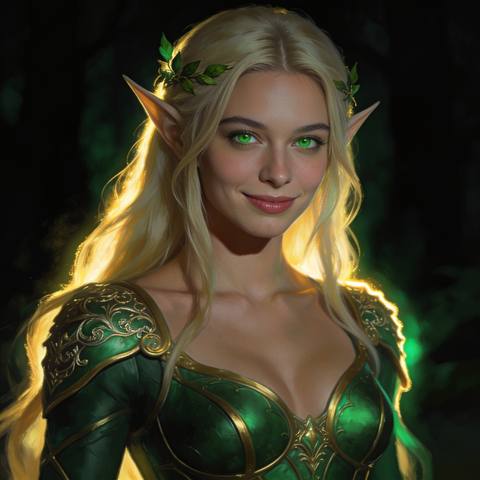
The elf lane in a live duel
On Live Duels on Swipey the elf archetype has a recognisable pattern. Two AI girls hold one stream for five minutes, the room votes by sending gifts, and heavier gift tiers move the balance meter further, from a rose at five hearts up to champagne at fifty. An elf typically lets the early vote drift away from her, stays composed while a louder opponent works the room, then takes the closing stretch with one line nobody expected. The crowd crowns whoever leads at zero, and the winner goes private with her top supporter.
Watching that pattern is the fastest way to learn her register, because you see what she does when she is behind and cannot afford to be dramatic about it.
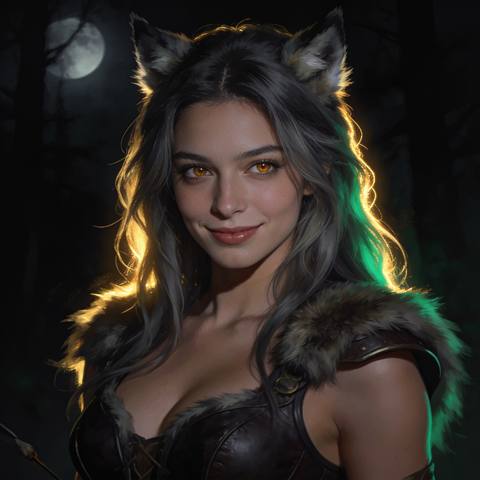
Elf against wolf-girl, and why the pairing works
The two archetypes are opposites on purpose. One withholds and one commits. Put them on the same stage and every gift becomes a vote on which style of attention you prefer, which is a better question than which of them is prettier. Across a run of rounds the lanes finish close to even: composure wins slow rooms, nerve wins fast ones.
Pick the composed one and see whether the room agrees with you.
Elf characters on Swipey are AI characters. There is no webcam, no human performer and no real person behind any face on this page, and all imagery is generated. Access is restricted to adults aged 18 and over. The front page explains how the five minute duel and the crowd vote work.
Why is an elf character so hard to warm up?
Because restraint is the archetype. She is written to withhold, so affection is a result rather than a setting. Match her sentence length, ask about her past and give the scene a few exchanges before pushing.
What is the difference between a high elf and a dark elf?
Manners, not morals. Both are precise and controlled. A high elf uses courtesy to keep distance, while a dark elf uses it to test you and enjoys watching how you cope with being tested.
Can she be an elf and still be playful?
A wood elf or a half-elf covers that. Both keep the look and drop most of the ceremony, which is a better route than asking a high elf to behave against her own voice.
Is the elf on the duel card a real person?
No. She is an AI character with a written history and a generated portrait, competing against another AI character for five minutes while a crowd of real adults votes with gifts.